
If you’ve been watching housing headlines lately, you’ve probably noticed a quiet but steady theme. FHA loan delinquencies are ticking up in 2026.
Not dramatically. Not in panic mode. But enough that people are asking questions.
And if you currently have an FHA loan, or you’re thinking about getting one, that question becomes personal pretty quickly.
Is this something to worry about?
Is it a sign of something bigger?
Or is it simply the market adjusting to a new normal?
Let’s walk through it calmly. No alarm bells. Just context.

First, What’s Actually Happening?
FHA loan delinquency rates in 2026 are rising compared to previous years. That part is true.
But context matters.
FHA loans are often used by:
- First-time homebuyers
- Borrowers with lower down payments
- Buyers with modest credit histories
In other words, FHA borrowers are often more financially sensitive to shifts in inflation, insurance costs, property taxes, and everyday expenses.
When monthly budgets tighten, even slightly, delinquency rates can reflect that faster than conventional loans do.
This doesn’t mean FHA loans are failing. It means FHA borrowers are feeling economic pressure sooner.
That’s an important distinction.
Why FHA Delinquencies Are Increasing in 2026
Several factors are contributing to the uptick:
1. Higher Housing Costs Overall
Property taxes in many Texas counties have risen. Insurance premiums have climbed. Maintenance costs haven’t exactly gone down either.
Even if your mortgage rate is fixed, your total housing payment may not be.
For FHA borrowers who put down 3.5 percent, there’s often less financial cushion. Small increases matter more.
2. Persistent Inflation
Groceries. Utilities. Transportation. None of it is cheaper than it was a few years ago.
FHA loans tend to attract buyers who stretch carefully to become homeowners. Inflation squeezes those margins.
To be fair, this isn’t unique to FHA borrowers. But the impact shows up more clearly in that segment.
3. Mortgage Insurance Structure
Unlike conventional loans, FHA loans require mortgage insurance premiums that usually remain for the life of the loan.
That additional monthly cost doesn’t disappear when you build equity. It stays.
Over time, that can feel heavier, especially if refinancing isn’t an immediate option.
Should Texas Borrowers Be Concerned?
Concerned? Maybe alert is a better word.
Rising delinquency rates don’t automatically signal a housing crash. They do signal stress.
Texas markets remain relatively strong in many areas. Job growth is still present in key cities. Rental demand remains active.
But affordability is tighter than it was. And borrowers need to approach decisions with clearer eyes than perhaps they did in 2021.
What This Means If You Already Have an FHA Loan
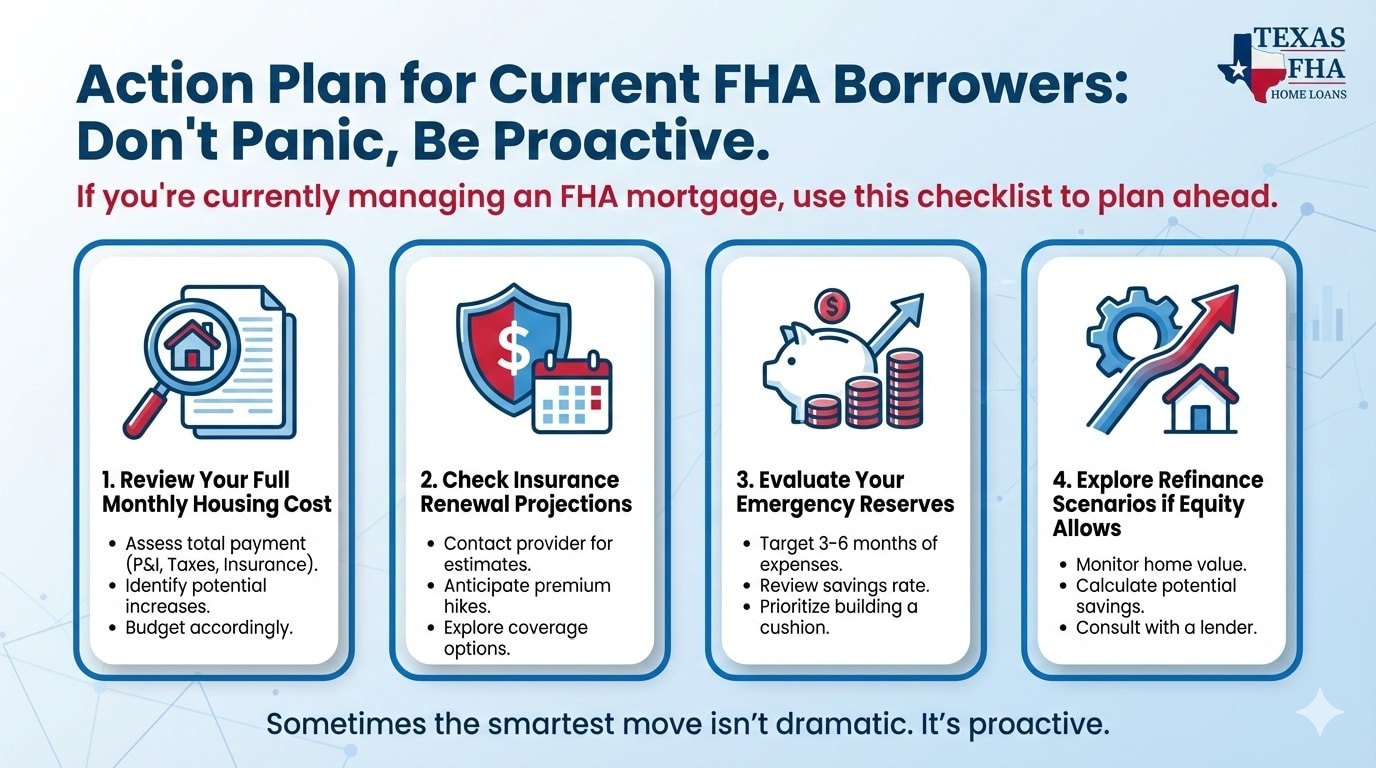
If you’re currently managing an FHA mortgage, this is not a reason to panic.
It is a reason to:
- Review your full monthly housing cost
- Check insurance renewal projections
- Evaluate your emergency reserves
- Explore refinance scenarios if equity allows
Sometimes the smartest move isn’t dramatic. It’s proactive.
If you ever consider turning your property into a rental to relieve pressure or relocate, understanding how professionally managed rentals operate can help. For example, you can click here for more info to see how WeLease structures leasing and tenant placement in active markets. Knowing how rentals perform in your area adds flexibility to your long-term strategy.
Flexibility matters more in 2026 than it did a few years ago.
What This Means If You’re Considering an FHA Loan
If you’re looking at FHA loans right now, rising delinquency statistics shouldn’t scare you away. They should encourage you to plan carefully.
Ask yourself:
- Can you comfortably afford the full payment, including insurance and taxes?
- Do you have reserves beyond your down payment?
- What happens if one income stream shifts?
FHA loans are still one of the most accessible homeownership paths available. They are not inherently risky. They simply require realistic budgeting.
Some buyers also evaluate the rental market before purchasing. Strong leasing demand can create a safety valve if life changes. In several growing Texas and neighboring markets, professional property managers like Hallmark Property Management help maintain stable occupancy and tenant placement standards. You can visit this site to understand how structured management can support property performance over time.
Again, not as a backup plan. But as context.
Is This a Warning Sign for the Broader Texas Housing Market?
At the moment, rising FHA delinquencies appear more like a stress indicator than a systemic breakdown.
Conventional loan delinquency rates remain comparatively stable. Home prices in many Texas cities have moderated rather than collapsed. Inventory has improved in certain areas.
That doesn’t mean conditions are easy. It means they are normalizing.
And normalization can feel uncomfortable if you got used to extreme seller advantages.
The Bigger Lesson for 2026 Borrowers
The takeaway isn’t “avoid FHA loans.”
The takeaway is this:
Homeownership today requires margin.
Margin in your budget.
Margin in your expectations.
Margin in your timeline.
The era of ultra-low rates masked many affordability risks. Today’s environment exposes them more quickly.
That’s not a crisis. It’s clarity.
If you enter an FHA loan understanding the full payment, the long-term insurance structure, and your own financial flexibility, it can still be a smart move.
If you stretch beyond what’s sustainable, statistics eventually catch up.
Final Thoughts Before You Make a Move
Rising FHA loan delinquencies in 2026 are a signal. Not a siren.
They’re a reminder that economic conditions shift. Costs evolve. Borrowers need to evaluate decisions based on current reality, not past conditions.
If you’re exploring FHA loan options in Texas and want a clearer picture of how payment structure, insurance, and long-term planning intersect, Texas FHA Home Loans can help you run scenarios and evaluate what truly fits your financial position today.
Because the goal isn’t just qualifying for a loan. It’s sustaining it comfortably.

Gerry is a licensed mortgage loan originator and digital marketer with 25+ years in the mortgage business, specializing in conversion rate optimization, SEO, AI Overviews, and generative engine optimization (GEO) for the mortgage and real estate industry. Today he builds agentic intelligent systems, meaning AI agents that research, create content, nurture leads, and handle follow-up, to help mortgage and real estate business owners get found online, convert more leads, and scale. Gerry pairs decades of hands-on industry knowledge with the latest AI tools, so his clients stay a step ahead of the market.