
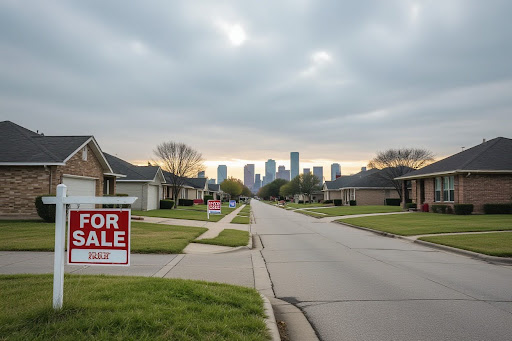
You may have noticed far fewer moving vans and for-sale signs in your area as Texas housing turnover sinks to a decade low, leaving the market effectively frozen. High mortgage rates, elevated prices, and economic uncertainty are keeping many homeowners glued to low-rate loans. At the same time, buyers hover on the sidelines, creating rare negotiating leverage for those who do list.
Economic and affordability pressures
Affordability and uncertainty are locking you in: roughly 70% of homeowners have mortgage rates below 5% while current averages sit near 6.2%, so just 28 of every 1,000 U.S. homes changed hands through September, and San Antonio’s turnover plunged about 27% year-over-year. You’ll see listings tick up to about 39 per 1,000, but demand remains weak, with about twice as many sellers as buyers in Texas, giving you leverage only if you’re ready to act.
Why the Slowdown?
Locked-in mortgages and affordability
You feel it: about 70 percent of homeowners have mortgage rates below 5 percent, while today’s average sits near 6.2 percent, so you can’t easily trade your low monthly payment for a new loan. Buyers are also priced out as median prices hit $415,200, and borrowing costs plus property taxes rise, and Redfin shows just 28 of every 1,000 homes sold through September, with San Antonio down nearly 27 percent. So you see fewer listings and tougher negotiations.
More Homes for Sale, but Not by Much
Listings tick up, but scarcity persists
You’ll see a small uptick: nationwide, 39 of every 1,000 homes were listed through September, and slightly more Texans listed than in 2023, yet listings sit about 25% below pre-pandemic levels. The NAR reports that existing-home sales rose 1.5% to 4.06 million annually, and the median September price hit $415,200. Even with modest inventory gains, you and your agent will find choice limited and negotiating leverage confined to pockets where sellers are willing to budge.
What It Means for Texans
Takeaways for Buyers and Sellers
If you’re thinking of moving, note that only 28 of every 1,000 homes changed hands through September 2025, and San Antonio’s turnover fell by nearly 27%; roughly 70% of homeowners still have mortgages at under 5%, while rates average about 6.2%. That leaves you, as a buyer, with negotiating leverage and potential deals. If you’re selling, you’ll likely face about twice as many sellers as buyers in Texas, so price realistically and expect a longer time on market.
Impact on Home Buyers and Sellers
What this means for you
You face more negotiating power but tighter options: Texas turnover plunged to 28 sales per 1,000 homes nationwide, San Antonio fell nearly 27%, and across Texas, there are about two sellers for every buyer. With roughly 70% of owners holding sub‑5% mortgages while current rates sit near 6.2%, many won’t list, keeping effective inventory thin despite ~39 listings per 1,000 nationally. Expect longer searches, more deal fall‑throughs, and opportunities to win concessions if you act decisively and price realistically.
Future Outlook for the Texas Housing Market
What to expect
Expect more frozen activity through next year: with just 28 of every 1,000 homes changing hands nationwide and San Antonio turnover down nearly 27%, you’ll likely face limited choices despite a slight rise in listings (39 per 1,000). Since about 70% of homeowners sit on sub-5% mortgages while average rates hover near 6.2%, many Texans remain locked in, keeping supply tight relative to demand. For you as a buyer, negotiate firmly; as a seller, price realistically against a $415,200 median and cautious buyers.
What’s in Store for Texas Housing
You face a Texas market where turnover has fallen to a decade low as homeowners stay locked into low mortgage rates and buyers pull back amid higher rates, soaring prices, and economic uncertainty. That freeze creates windows of opportunity, more negotiable listings, and slightly higher inventory, but you’ll need patience and realistic pricing if you’re selling, and careful financial planning if you’re buying. The market rewards cautious, well-timed decisions.
FAQ
Q: Why has the Texas housing market slowed so much this year?
A: Two main forces are at work. First, many homeowners are effectively locked into low mortgage rates from the pandemic years; about 70 percent of U.S. borrowers have rates under 5 percent, while current averages sit near 6.2 percent, so moving would mean taking on a much higher monthly payment. Second, affordability pressures (high home prices, rising property taxes, and borrowing costs) and broader economic uncertainty have made buyers cautious. The combination means fewer people are willing or able to transact, producing the unusually low turnover we’re seeing.
Q: How severe is the slowdown in Texas compared with the rest of the country?
A: Nationwide, only 28 out of every 1,000 homes changed hands in the first nine months of 2025, the weakest turnover since at least the early 1990s. Texas metros have felt the chill even more sharply. San Antonio’s turnover rate plunged nearly 27 percent year over year, the largest drop among the country’s 50 largest metro areas. Dallas, Houston, and Fort Worth also posted double-digit declines. By contrast, some markets, like Virginia Beach, saw modest increases, with roughly 35 homes per 1,000 changing hands.
Q: What does this mean for buyers and sellers in Texas right now?
A: For buyers, low demand opens negotiating room: sellers are more likely to face price pressure and contingencies. For sellers, patience and realism about pricing matter; listing doesn’t guarantee a quick sale. Supply in Texas is not as constrained as in other regions; new construction continues, so the bottleneck is demand. If mortgage rates or prices ease, activity could pick up, but until then, many Texans will stay put, and the market will move slowly.
Homes aren’t moving, literally
Walk through a typical Texas neighborhood, and you might notice few moving trucks, sparse For Sale signs, and the same faces at block parties. That’s not just anecdote: a Redfin analysis using MLS records and county data found only 28 out of every 1,000 homes in the U.S. traded hands in the first nine months of 2025, the lowest turnover rate in decades. In Texas, the slowdown is even more pronounced. San Antonio, once a top draw during the pandemic, saw the steepest year-over-year drop among the nation’s 50 largest metros; Dallas, Houston, and Fort Worth aren’t far behind.
-
Locked-in owners and wary buyers
What’s keeping the market stuck is twofold. On the one hand, a large share of homeowners have mortgage rates far below today’s averages. Letting go of a 3% or 4% rate to buy at 6% or more would dramatically increase monthly payments, so many are choosing to stay. On the other hand, buyers facing high prices, higher borrowing costs, and economic uncertainty are either backing out of deals or pausing their searches entirely.
“America’s housing market is defined right now by caution,” Chen Zhao, Redfin’s head of economics research, says. Buyers are walking away from transactions or simply waiting for a better entry point, whether that’s lower rates, softer prices, or both.
-
Small signs of movement, but not a thaw
There are a few modest bright spots. Slightly more homeowners listed their properties in 2025 than in 2023: nationwide, about 39 out of every 1,000 homes were listed for sale through September, edging up from the record lows of the prior two years. The National Association of Realtors reported existing-home sales rose 1.5 percent from August to a seasonally adjusted annual rate of 4.06 million in September, and median prices hit $415,200, the highest September level on record.
Still, listings remain about 25 percent below pre-pandemic levels in many markets, and demand has cooled across housing types in Texas. While single-family homes continue to move faster than condos or townhouses in much of the country, Texas has seen softening across the board.
-
Supply isn’t the problem; demand is
Texas differs from some markets because new construction has continued, making supply less tight here. The challenge is a lack of buyers. In many Texas metros, there are roughly twice as many sellers as buyers right now, which flips the typical dynamic and gives purchasers more leverage when they do shop.
That shift matters for pricing and negotiations. Sellers who price optimistically may find their homes sitting on the market, while active buyers can negotiate harder or secure concessions. If mortgage rates fall or economic confidence returns, that balance could tilt back toward more activity. Until then, expect a slow, negotiation-heavy market where many homeowners opt to stay put rather than risk higher payments.
What to watch next
Keep an eye on mortgage rates, inventory levels, and whether a sustained price drop prompts more listings. Policy moves, regional job growth, or signs of falling inflation could also nudge hesitant buyers back into the market. For now, Texans are living through a market defined by a pause: houses are being built, listings are rising modestly, but transactions remain historically scarce, keeping the whole system moving more slowly.

Gerry is a licensed mortgage loan originator and digital marketer with 25+ years in the mortgage business, specializing in conversion rate optimization, SEO, AI Overviews, and generative engine optimization (GEO) for the mortgage and real estate industry. Today he builds agentic intelligent systems, meaning AI agents that research, create content, nurture leads, and handle follow-up, to help mortgage and real estate business owners get found online, convert more leads, and scale. Gerry pairs decades of hands-on industry knowledge with the latest AI tools, so his clients stay a step ahead of the market.