

FHA borrowers typically wait two years from a Chapter 7 discharge date before qualifying through automated underwriting, or as little as 12 months into a Chapter 13 repayment plan with court permission. Documented extenuating circumstances can shorten the Chapter 7 wait to as little as 12 months, but that path always requires manual underwriting. A prior foreclosure or short sale can override both timelines, resulting in a longer waiting period.
TL;DR:
- Borrowers with Chapter 7 bankruptcy must wait two years from discharge for automated FHA eligibility, but can qualify in 12 months with extenuating circumstances and manual underwriting.
- In Chapter 13, eligibility depends on 12 months of timely payments and court approval, with discharge date resetting the timeline if the plan completes.
- Foreclosures or short sales can extend the wait period to three years from the date of title transfer, overriding bankruptcy timelines.
- Gathering court documentation and proof of credit rebuilding before applying can prevent delays and increase chances of approval.
- Working with a lender experienced in FHA bankruptcy cases ensures proper review of court paperwork and avoids common eligibility miscalculations.
Table of Contents
- How Long Is the FHA Bankruptcy Waiting Period?
- When Can Extenuating Circumstances Shorten the Wait?
- What Documents Do Lenders Require After Bankruptcy?
- How Does Manual Underwriting Work After Bankruptcy?
- Timeline Examples: Where Does Your Case Fall?
- What Should You Do Before You Apply?
- A Lender’s View on Bankruptcy Mistakes Borrowers Make
- How a Texas FHA Loan Helps Borrowers After Bankruptcy
- Sources
How Long Is the FHA Bankruptcy Waiting Period?
The clock starts on different dates depending on which chapter you filed, and getting that date wrong is the single most common reason applicants misjudge their own eligibility.
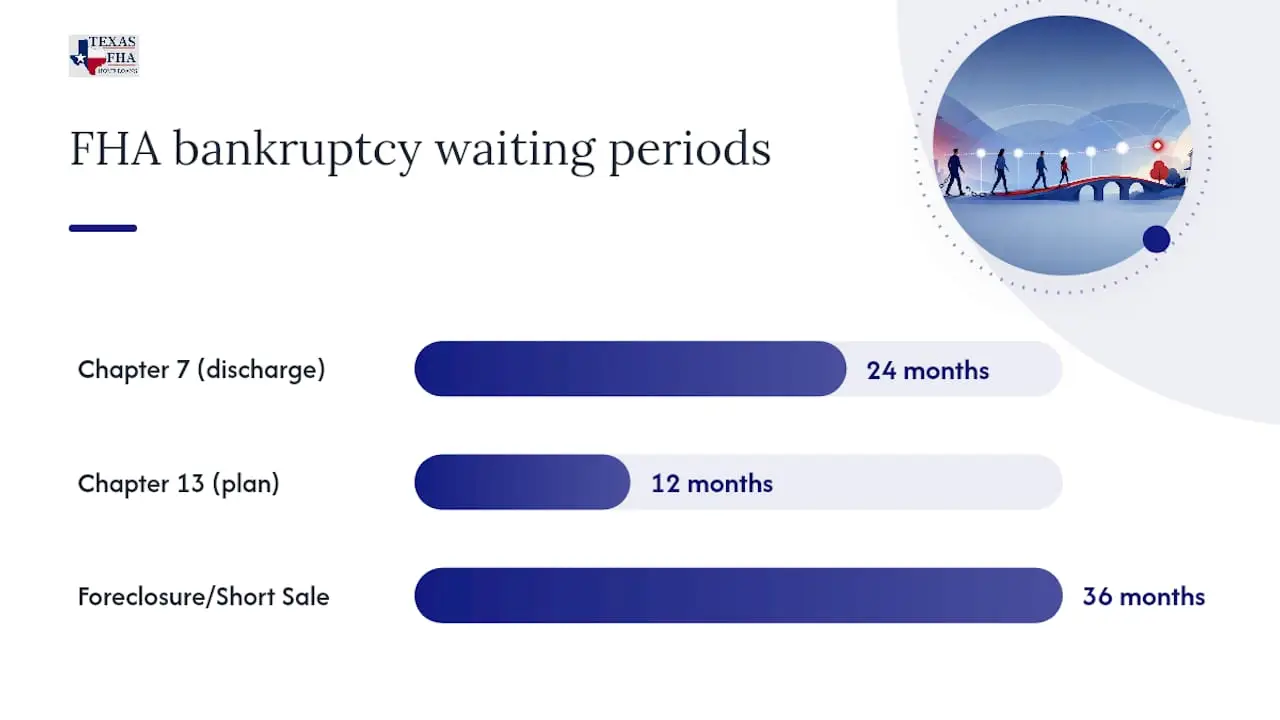
For Chapter 7, HUD counts from the discharge date, not the filing date. Those two dates can be a year or more apart, so a borrower who filed in 2023 but wasn’t discharged until 2024 must use the later date. HUD’s own guidance confirms mortgagees must document that two full years have passed since discharge before a file qualifies for standard automated processing.
Chapter 13 works differently because the borrower continues to repay creditors under a court-approved plan. FHA explains that eligibility is determined by plan performance rather than by a single discharge date. In practice, that means:
- Twelve months of on-time payments under the Chapter 13 plan, verified by the trustee.
- Written permission from the bankruptcy court to enter into a new mortgage obligation.
- If the plan has already been completed and discharged, the file reverts to a standard Chapter 7-style review as of that discharge date.
One wrinkle catches people off guard: if a foreclosure or short sale shows up anywhere in your history, a separate three-year waiting period measured from the transfer of title can take over and control your eligibility date, even if your bankruptcy wait has already passed.
When Can Extenuating Circumstances Shorten the Wait?
HUD Handbook 4000.1 allows lenders to treat certain hardships as extenuating circumstances, which can reduce the Chapter 7 waiting period from two years to 12 months. This isn’t a loophole. It’s a narrow exception built around documented, nonrecurring events, and HUD’s mortgagee letter on economic events spells out exactly what qualifies.
Events that typically qualify include:
- A verified job loss or income reduction tied to a broader economic downturn.
- A serious illness or medical event that created overwhelming, unavoidable debt.
- The death of a wage earner in the household.
- A natural disaster that damaged property or disrupted income.
Divorce-related financial strain can sometimes factor in too, particularly when it intersects with job loss or medical costs. Readers navigating that overlap may find financial planning guidance after divorce useful for organizing the paperwork that a lender will eventually request.
Using extenuating circumstances to shorten the waiting period requires manual underwriting, in which a human underwriter evaluates the file rather than automated processes.
Pro Tip: Start collecting documentation for your hardship claim the moment you know you’ll apply within two years of discharge. Court records, medical bills, and layoff notices lose nothing by sitting in a folder, but they take weeks to request if you wait until your lender asks.
What Documents Do Lenders Require After Bankruptcy?
Lenders must obtain and verify official bankruptcy court records rather than relying solely on credit report summaries, given potential inconsistencies or delays.
Expect your loan officer to request:
- The full bankruptcy discharge order, not just a notice that a case was filed.
- Docket entries confirming the case number and its final disposition.
- Chapter 13 trustee statements showing 12 months of on-time plan payments.
- Written bankruptcy court permission to incur new debt, if you’re applying before discharge.
- Any extenuating-circumstances documentation, if you’re using the shortened 12-month path.
If your discharge fell within the last two years, or you’re claiming an exception, the lender will automatically route your file to manual underwriting rather than an automated system. That single fact shapes almost everything else about how your application gets reviewed.
How Does Manual Underwriting Work After Bankruptcy?
Manual underwriting means a person, not software, decides whether your file makes sense. Underwriters look past the credit score and examine payment patterns, reserves, and whether your recovery from bankruptcy looks stable or shaky.
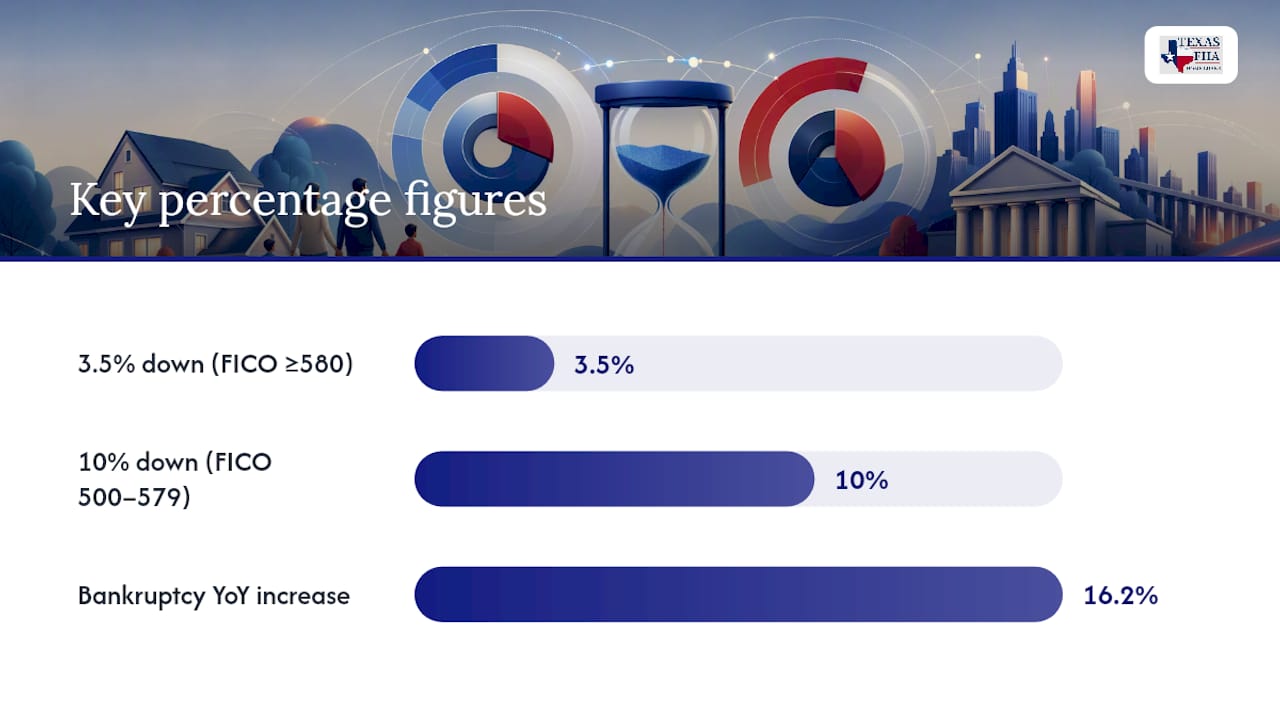
FHA’s baseline credit and down payment breakpoints still apply as a starting point:
- A FICO score of 580 or higher typically supports a 3.5% down payment.
- Scores between 500 and 579 generally require a 10% down payment.
- Manually underwritten files often require stronger compensating factors, such as verified cash reserves, a low debt-to-income ratio, or documented residual income.
Bankruptcy filings climbed 16.2% year over year according to federal court data, which means far more borrowers are navigating this exact underwriting path than most people assume.
A manually underwritten file can still be denied even after the waiting period passes if income looks unstable or recent credit shows new missed payments. The underwriter is grading your recovery, not just checking a calendar.
Timeline Examples: Where Does Your Case Fall?
Concrete dates make this easier to picture than abstract rules do.
- Chapter 7, discharged 25 months ago: You clear the standard two-year mark and typically qualify for automated underwriting, assuming your credit has otherwise recovered.
- Chapter 7, discharged 18 months ago: You’re inside the two-year window. Unless you can document extenuating circumstances, you’ll need to wait roughly six more months, or apply now through manual underwriting if a qualifying hardship applies.
- Chapter 13, 14 months of on-time payments, court permission granted: You’re eligible to apply now. If the plan is later discharged, recheck your date against the Chapter 7 rule to confirm nothing has changed.
- Bankruptcy plus a short sale on the same property: The three-year foreclosure style rule, measured from title transfer, often runs longer than your bankruptcy wait and becomes the date that actually controls.
What Should You Do Before You Apply?
Get your paperwork moving before you shop for a home, not after you find one.
Start with a document checklist:
- Order certified copies of your discharge order and full docket from the bankruptcy court.
- Assemble Chapter 13 trustee payment records showing the required 12 months.
- Request the court’s written permission letter early if you’re still inside an active Chapter 13 plan.
- Pull your own credit reports to confirm that the reported discharge date matches your court documents.
Rebuilding credit matters just as much as the calendar. Paying every account on time, keeping a secured credit card or credit-builder loan in good standing, and avoiding new late payments all strengthen a manually underwritten file. Steady, well-documented credit rebuilding tends to matter more to underwriters than a slightly higher score achieved through shortcuts.
Pro Tip: Call a lender well before your waiting period ends, not after. An FHA specialist can confirm your exact eligibility date and flag whether your file will need manual underwriting, so there are no surprises when you’re ready to make an offer.
A Lender’s View on Bankruptcy Mistakes Borrowers Make
Borrowers lean too hard on their credit report and not enough on their actual court paperwork. Credit bureaus sometimes list an outdated or inaccurate discharge date, and a lender working from that wrong date can miscalculate your eligibility by months. The other recurring mistake is assuming the filing date counts. It doesn’t. Only the discharge date or Chapter 13 plan performance controls the clock. Working with a specialist who reads court documents rather than credit summaries prevents both problems before they cost you a closing date.
— Gerry Nicodemus
How Texas FHA Loan Helps Borrowers After Bankruptcy
Some lenders provide borrowers rebuilding after bankruptcy with someone who reads your actual court paperwork instead of guessing off a credit report summary. An FHA-approved lender can handle files that require manual underwriting, including cases built on extenuating circumstances or an active Chapter 13 plan.
Specialists can walk you through the documents you’ll need, help confirm your eligibility date, and prepare your file so a manually underwritten application proceeds smoothly. If you’re unsure whether you meet FHA loan requirements after a bankruptcy, or you’re a first-time buyer trying to map out a realistic timeline, reach out for a consultation and get a straight answer on where your case actually stands.
Sources
Verify timelines directly against HUD’s FAQ, Handbook 4000.1, and confirm any lender’s license through NMLS Consumer Access.
This article is general information, not a substitute for advice from a qualified financial advisor. Consult a qualified financial professional about your own circumstances before acting on anything here.
Recommended
- Bankruptcy and FHA Loans – Qualify For AN FHA Loan After Bankruptcy
- FHA Loan Requirements | FHA Loan Qualifications in Texas
- FHA Loans Frequently Asked Questions – Learn About FHA Loan

Over 25 years of experience in the Mortgage business. A Digital Marketer specializing in Conversion Rate Optimization, Search Engine Optimization, and Artificial Intelligence Overview Optimization for the Mortgage and Real Estate industry.