
Packing is one of those things that looks manageable on paper. A few boxes. Some tape. A weekend, maybe. Then reality shows up with a pile of half-used cords, mismatched lids, and a closet that feels like it’s quietly judging you.
If you’re packing up a Texas home, the experience can vary wildly. Maybe you’re moving out of a spacious suburban house where every room somehow collected its own junk ecosystem. Or perhaps you’re downsizing into a smaller apartment where every square inch suddenly matters. Either way, packing has a way of exposing how much stuff you actually own. And how little of it sparks joy when you’re carrying it down the stairs.
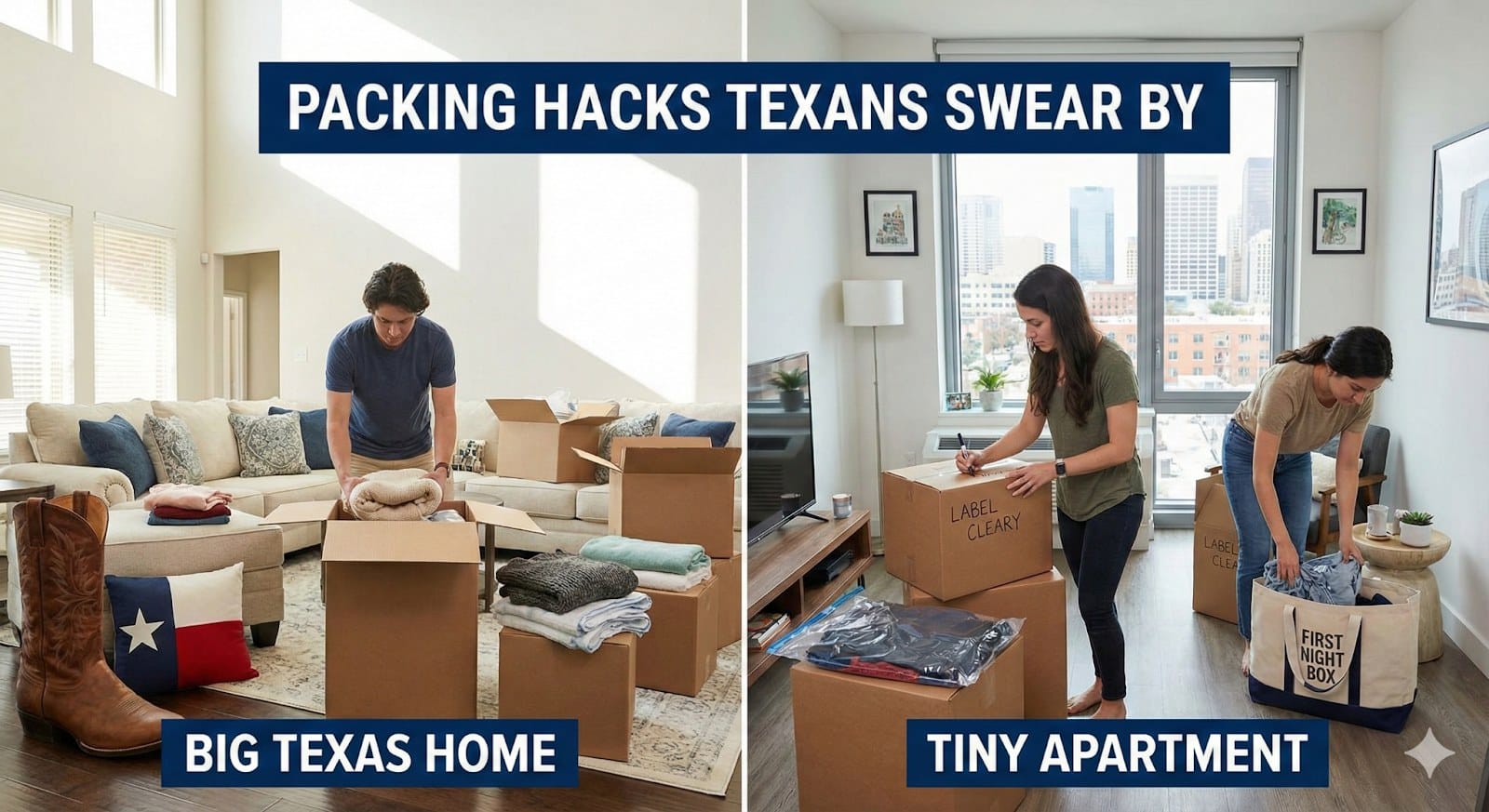
Let’s talk about packing hacks Texans actually swear by. Not the glossy, perfect-world tips. The ones that hold up when the boxes start collapsing and you’re questioning your life choices.
Start earlier than you think you need to
This sounds obvious. It still gets ignored.
Packing always takes longer than planned. Always. Even if you’re convinced you’re different. You’re not. No one is. What helps is starting with the things you don’t actively use and slowly working forward. Seasonal clothes. Extra linens. Kitchen gadgets that looked useful at the time.
The earlier you start, the less frantic the last few days feel. And frantic packing leads to mystery boxes. Those are the worst kind.
Sort before you pack, not after
There’s a temptation to pack everything and deal with it later. That’s understandable. It’s also how you end up moving items you clearly do not want into your new place, where they will continue to bother you for years.
Before something goes into a box, pause. Just briefly. Ask whether it’s worth the effort of packing, lifting, transporting, and unpacking. If the answer is no, let it go. Donate it. Recycle it. Set it free.
Downsizing into a smaller apartment makes this step even more important. Storage disappears fast when square footage shrinks.
Use what you already have as packing material
You do not need to buy endless rolls of bubble wrap. Towels, sweaters, socks, even old T-shirts make excellent padding for fragile items. Wrap dishes in soft clothes. Stuff shoes with smaller items. Slide belts between stacked pans.
This does two things. It saves money. And it reduces the number of boxes labeled “random clothes” that explode open later.
It also makes unpacking feel slightly less miserable. Slightly.
Label boxes like your future self will thank you
Writing “kitchen” on a box is technically correct. It’s also not very helpful when you’re looking for one specific thing at 10 PM.
Instead, label boxes with room and purpose. “Kitchen. Everyday dishes.” “Bedroom. Work clothes.” “Bathroom. First night essentials.” Add a note if something is fragile or needs to be unpacked early.
Your future self will be tired. Possibly hungry. Definitely impatient. Help them out.
Pack an honest first-night box
Everyone talks about a first-night box. Most people underestimate what should go in it.
Think through the first 24 hours realistically. Toothbrushes. Phone chargers. Medications. A change of clothes. Toilet paper. Paper towels. Snacks. Basic tools. Maybe a coffee maker, if that’s part of your survival plan.
This box should not be buried under twelve others. Keep it separate. Guard it with your life.
Furniture measurements matter more than you expect
Texas homes tend to have space. Apartments, not always. Before you move, measure large furniture and compare it to your new layout. Especially doorways. Especially stairwells.
There is a unique kind of heartbreak that comes from discovering your couch will not fit through the door. Avoid that moment if you can.
If you’re renting, it’s also worth checking what the property allows when it comes to moving days, elevators, or reserved loading zones. Some property management companies provide clear guidance on this. If you want to see how that’s handled in certain Texas communities, you can click here for more info and get a feel for what organized move-ins look like.
Break big moves into smaller wins
Packing an entire home is overwhelming. Packing one drawer is manageable. Focus on small, specific tasks. One shelf. One closet section. One category at a time.
Momentum builds quietly. You don’t always notice it until suddenly half the room is done and you’re less irritated than you were an hour ago. That’s progress.
Be realistic about what you need help with
Some moves are DIY-friendly. Some are not. Stairs, tight parking, heavy furniture, or strict building rules can complicate things fast.
If you’re moving into a managed rental, it can help to understand the policies ahead of time. Certain property managers are proactive about sharing move-in expectations and timelines. You can visit this site to see how some Texas property management teams approach that process and reduce unnecessary surprises.
Knowing the rules upfront saves time. And nerves.
Expect a little chaos. Plan anyway.
Even with the best packing hacks, moves are messy. Boxes end up in the wrong rooms. Something important goes missing for a day or two. That doesn’t mean you failed.
Packing well isn’t about perfection. It’s about making the process less painful and the landing a bit softer. If you’ve reduced stress by even 20 percent, that’s a win. And maybe that’s a result of the proper home maintaining put in place.
One last thought before you tape the final box
Moves often happen during bigger life transitions. New jobs. New cities. New chapters that feel exciting and unsettling at the same time. Packing forces you to confront what you’re bringing with you, both literally and figuratively.
Take it one box at a time. Give yourself some grace when it gets annoying. Because it will.
And if you’re planning a move in Texas and navigating housing decisions along the way, it may be worth considering guidance from professionals who understand the local market. Texas FHA Home Loans can be a helpful resource as you explore options and plan what comes next, especially when your next address is still taking shape.

Gerry is a licensed mortgage loan originator and digital marketer with 25+ years in the mortgage business, specializing in conversion rate optimization, SEO, AI Overviews, and generative engine optimization (GEO) for the mortgage and real estate industry. Today he builds agentic intelligent systems, meaning AI agents that research, create content, nurture leads, and handle follow-up, to help mortgage and real estate business owners get found online, convert more leads, and scale. Gerry pairs decades of hands-on industry knowledge with the latest AI tools, so his clients stay a step ahead of the market.