

There’s a quiet myth floating around the housing world. It goes something like this: if your credit score isn’t excellent, homeownership is off the table.
That idea has stuck around for years. Maybe because it sounds logical. Maybe because lenders once treated credit scores like strict gatekeepers.
But the reality, especially in Texas, is a little more nuanced.
You can still buy a home with less-than-perfect credit. The process just requires clearer expectations, smarter preparation, and a willingness to understand how lenders actually evaluate risk today.
If you’re sitting there thinking, my credit isn’t terrible, but it’s definitely not impressive, you’re not alone. A lot of borrowers fall into that middle category. And many of them successfully buy homes every year.
Let’s see how it works.

First, What Does “Less-Than-Perfect Credit” Actually Mean?
People often assume anything below a 700 score automatically disqualifies them from getting a mortgage. That’s not really how lending works.
Most lenders think about credit in ranges:
- 760+ tends to receive the best interest rates
- 700–759 is still considered strong
- 620–699 is fairly common for mortgage applicants
- 580–619 can still qualify for certain loan programs
That last range surprises people.
Many FHA loan programs allow borrowers with credit scores around 580 to qualify with a lower down payment. In some cases, even slightly lower scores may work if other financial factors are strong.
So while credit matters, it isn’t the only piece of the puzzle.
Why Texas Is Still a Realistic Market for Buyers
Texas housing markets have changed over the past few years. Prices climbed quickly in many cities, then began stabilizing.
The result is something closer to balance.
Homes are still valuable assets. But buyers are no longer competing with quite the same intensity seen during the peak pandemic years.
For borrowers with moderate credit, this matters. Less bidding pressure means more opportunities to negotiate and more time to get financing aligned.
It also means lenders are seeing a wider range of borrowers entering the market again.
Credit Is Only One Part of the Approval Equation
Mortgage lenders look at your financial picture holistically.
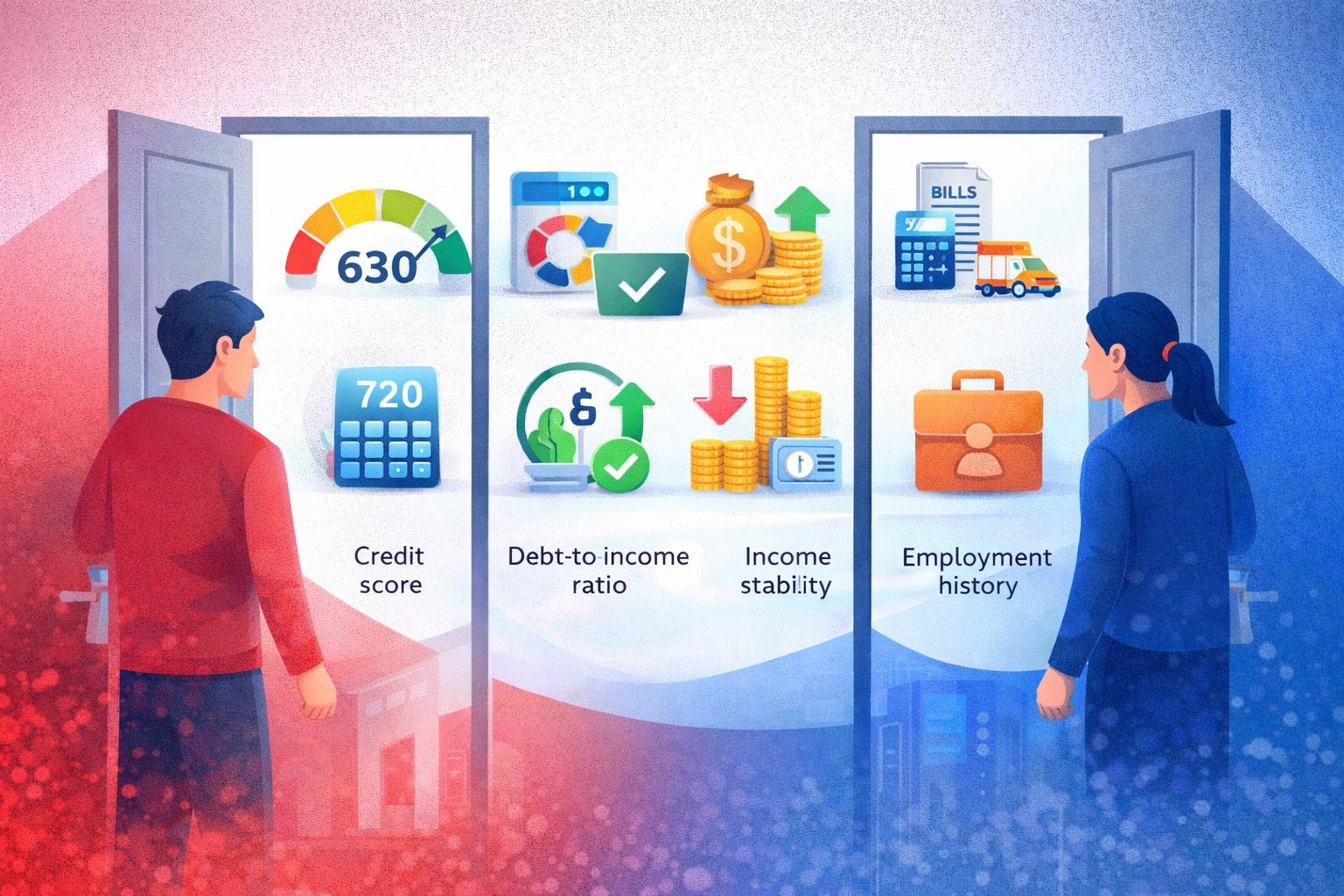
That includes:
- Credit score
- Debt-to-income ratio
- Income stability
- Down payment amount
- Employment history
You might have a 630 credit score but strong income and manageable debt. That profile can still qualify.
On the other hand, someone with a 720 score and heavy monthly obligations might face a tougher path. Credit opens the door, but the rest of your finances determine how wide it swings.
FHA Loans Often Help Bridge the Gap
FHA loans exist specifically to expand access to homeownership.
They allow lower credit scores. Smaller down payments. And more flexibility around past financial bumps, provided borrowers show stable income and responsible payment patterns recently.
For many Texans with imperfect credit, FHA loans become the most practical route into the housing market.
They aren’t the cheapest loans long term, largely due to mortgage insurance requirements. But they create an entry point that conventional loans sometimes don’t.
That access is exactly why FHA programs remain widely used today.
Credit Improvement Still Pays Off
Even if you can qualify with your current score, improving it slightly can make a noticeable difference.
Small credit changes can impact interest rates more than people expect.
A few simple steps can help:
- Paying down revolving credit balances
- Avoiding new credit inquiries before applying
- Making consistent on-time payments
- Correcting errors on your credit report
Sometimes even a 20–30 point increase can shift loan pricing enough to save thousands over time. It doesn’t require perfection. Just momentum.
The Rental Experience Can Also Strengthen Your Profile
A lot of borrowers underestimate how their rental history factors into lending conversations.
Consistent, on-time rent payments demonstrate financial discipline. That matters, especially for borrowers rebuilding credit.
In fact, according to Traverse Property Management, many long-term renters show payment reliability that rivals traditional mortgage borrowers. Property managers often see tenants who maintain consistent rent histories for years while gradually improving their credit profiles.
For lenders, a stable housing payment history can reinforce the idea that a borrower is capable of handling a mortgage responsibly.
Texas Still Offers Diverse Housing Options
Another reason buyers with moderate credit still succeed in Texas is market diversity. Different cities and neighborhoods offer different price points.
A buyer who feels priced out of one area may find reasonable options in another nearby community. Expanding the geographic search radius often opens up possibilities that weren’t obvious initially.
This flexibility allows buyers to align home prices with their financial comfort zone. That alignment is often more important than chasing a specific neighborhood.
The Biggest Mistake Buyers Make
The most common mistake isn’t bad credit. It’s assuming bad credit automatically disqualifies them from trying.
Many potential buyers spend years waiting for their score to become perfect. During that time, home prices and rents continue moving.
In reality, a conversation with a knowledgeable lender often reveals options that seemed out of reach. You might not qualify today. But you might qualify in six months with a clear action plan. That kind of clarity is powerful.
Timing Matters, But Preparation Matters More
Housing markets shift. Interest rates fluctuate. Economic cycles come and go. But preparation remains within your control.
Improving credit gradually, managing debt, saving for closing costs, and maintaining steady income all strengthen your position regardless of market conditions.
When opportunity appears, prepared buyers can act confidently. Unprepared buyers often stay stuck waiting.
A Final Thought for Texas Buyers
Buying a home with less-than-perfect credit isn’t unusual. It’s actually quite common.
What matters is understanding how lenders evaluate risk and approaching the process realistically.
If you’re exploring the possibility of homeownership and wondering how your credit profile fits into today’s lending environment, Texas FHA Home Loans can help you evaluate your options and determine what steps make sense next.
Because homeownership doesn’t always require perfect credit. Sometimes it just requires the right plan.

Gerry is a licensed mortgage loan originator and digital marketer with 25+ years in the mortgage business, specializing in conversion rate optimization, SEO, AI Overviews, and generative engine optimization (GEO) for the mortgage and real estate industry. Today he builds agentic intelligent systems, meaning AI agents that research, create content, nurture leads, and handle follow-up, to help mortgage and real estate business owners get found online, convert more leads, and scale. Gerry pairs decades of hands-on industry knowledge with the latest AI tools, so his clients stay a step ahead of the market.